
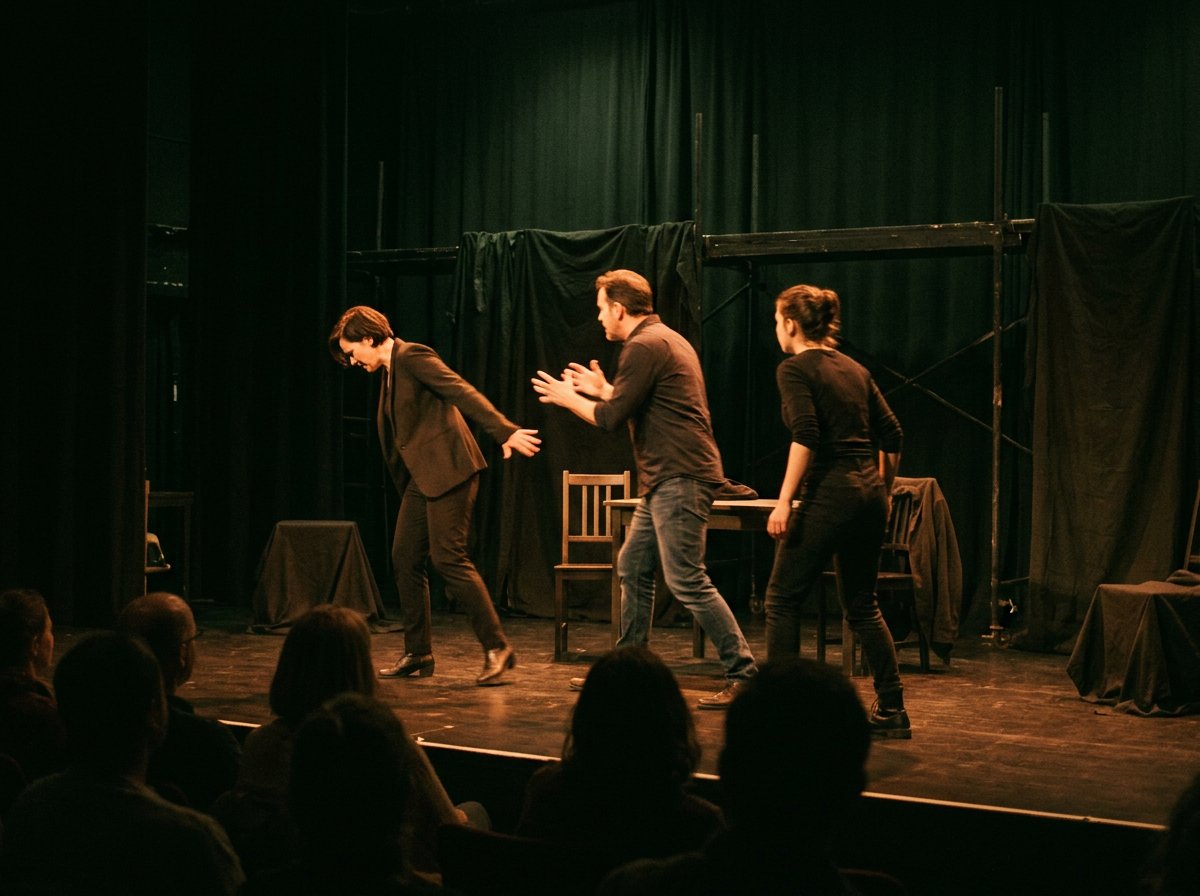
Whenever an actor steps into the stage lights, or an executive addresses an all-hands meeting, the biological response is nearly identical: blood moves away from the vocal cords and digestive system, the breath climbs high into the collarbones, and the mind speeds up.
For more than a decade of teaching drama and performance coaching across Montreal and Toronto, I have observed that most people attempt to solve performance anxiety purely through mental willpower. They tell themselves to “calm down,” rehearse their slide decks fifty times, or try to suppress their physical trembling. But you cannot think your way out of a physiological reflex.
1. The Physiology of Vocal Freeze
Your vocal folds and laryngeal muscles are intimately tied to the vagus nerve. When fear or evaluation anxiety strikes, the sympathetic nervous system triggers vocal constrictions—causing our pitch to climb, our voice to crack, or our words to rush.
“True presence on stage or in front of a team is not the total absence of fear; it is the physical capacity to stay grounded in your body while the fear is present.”
— Nikolai Afanasev, MEd
2. Three Embodied Exercises to Ground Your Voice
Before any major presentation, audition, or difficult conversation, practice these three somatic shifts:
- The Subdiaphragmatic Sigh: Inhale slowly through your nose into the lowest ribs for 4 counts, then exhale on a gentle, audible “haa” sound with a relaxed jaw. Repeat four times to cue your parasympathetic system.
- Pelvic Grounding & Foot Connection: Press through all four corners of each foot. Feel the physical floor beneath you supporting your weight so your chest does not carry the burden of posture.
- Vibrational Humming: Gently hum on an “mmm” sound with soft lips. Notice the bone conduction in your sinuses, teeth, and collarbones. This vibration directly stimulates the vagus nerve and relaxes vocal tension.
Key Practice Takeaway
Never rush into your first sentence. Arrive on your feet, feel the floor, exhale completely, look at the humans in front of you, and speak from the bottom of your breath.
Transforming Fear into Expressive Range
When you stop viewing adrenaline as an enemy and begin relating to it as pure energetic fuel, your expressive range doubles. Whether in an acting workshop or 1:1 performance coaching, our work is helping you discover the freedom to express yourself with authority, warmth, and unshakeable ease.