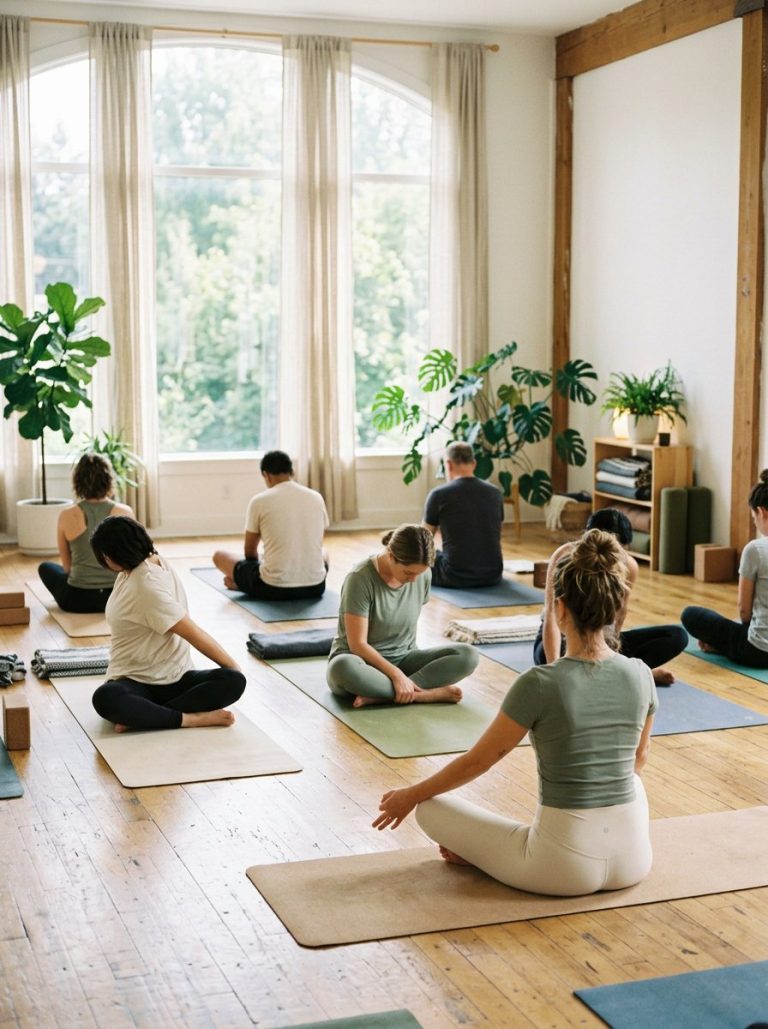
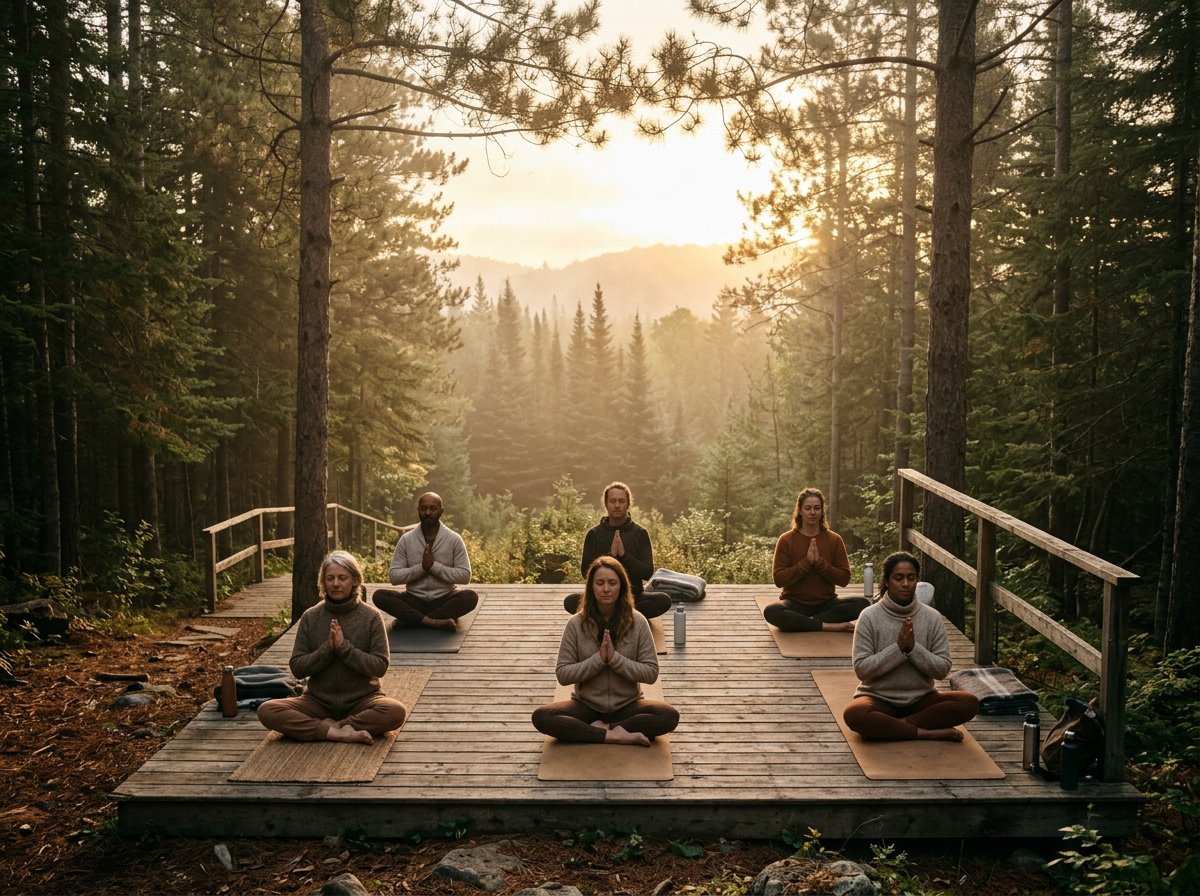
We live in a culture that rewards mental acceleration. We juggle multiple devices, process thousands of notifications, and frequently live entirely inside the cognitive space of our minds—disconnected from the subtle signals of the physical body.
When clients arrive at my studio or outdoor yoga sessions in Montreal, their most common symptom is not muscle tightness; it is chronic nervous system activation. They feel simultaneously exhausted and wired, unable to drop into deep, restorative rest.
Beyond Stretching: What Is Somatic Yoga?
Traditional fitness approaches treat yoga as mere physical flexibility or cardiovascular exertion. Somatic yoga, by contrast, is an inquiry into neuroception—the body’s unconscious ability to detect safety or threat.
“Yoga is not about touching your toes. It is about what you learn on the way down—how you breathe when things feel intense, and whether you can listen to your body without judging it.”
— Nikolai Afanasev
The Three Pillars of Somatic Regulation
- Orientation to the Environment: Before beginning physical movement, gently turn your head and look around the space. Notice colours, shapes, and safety cues. This simple biological act signals to the primitive brain that there are no predators present.
- Progressive Muscular Softening: Rather than forcing a deep stretch, move into 60% of your maximum range. Allow the nervous system to verify that the muscle is safe, which naturally releases long-held protective armoring.
- Coherent Rhythm: Synchronizing motion with extended exhales (inhaling for 4 counts, exhaling for 6 counts) triggers the baroreflex and decelerates heart rate.
Daily Somatic Reset (3 Minutes)
Lie on your back with knees bent and feet flat. Place one hand on your belly and one hand on your heart. Inhale into your belly for 4 seconds, pause for 1 second, and exhale for 6 seconds. Repeat for 10 breath cycles.
Integration into Daily Life
Regulating your nervous system is not a luxury—it is the foundation for creative problem solving, emotional patience, and authentic relationships. By practicing regularly, you build an internal reservoir of resilience that sustains you through life’s inevitable storms.